




On the occasion of Spiros Mourelatos’s recent presentation at the WHO webinar titled “Applying the One Health Approach in Cities and Regions”, we present a summary of the methodological approach of Eco-development within the One Health framework for better management of West Nile Virus (WNV).
The epidemiology of West Nile virus infection is based on the interaction of three key factors: the vector, the infectious pool, and infectious exposure (see Figure 1). Effective management of WNV requires simultaneous understanding and monitoring of all three of these parameters at four levels: data infrastructure, data utilization, decision-making, and field interventions.
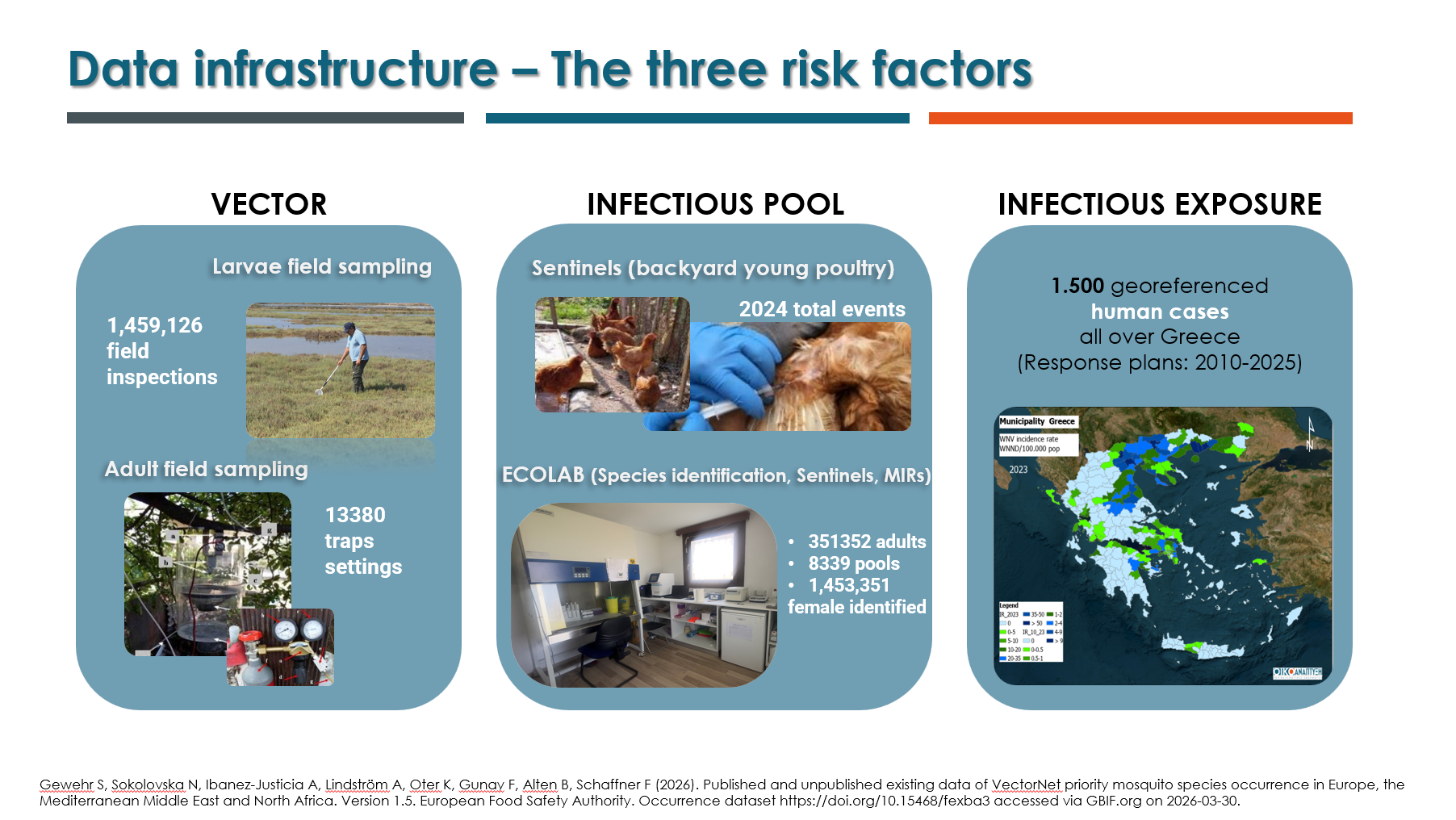
Ecodevelopment’s central field data collection platform, “ebite,” which compiles more than 13 million records from 300,000 field surveys covering 40% of the country’s territory, in addition to data on mosquito larvae and adults, which are reported to the data provider, now also collects data on virus circulation levels in adult mosquitoes and poultry.
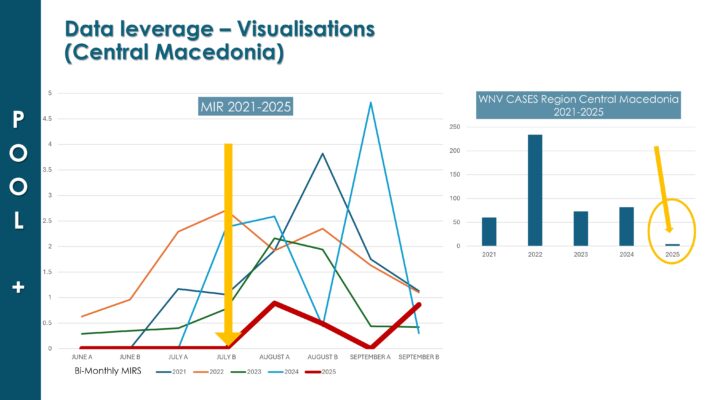
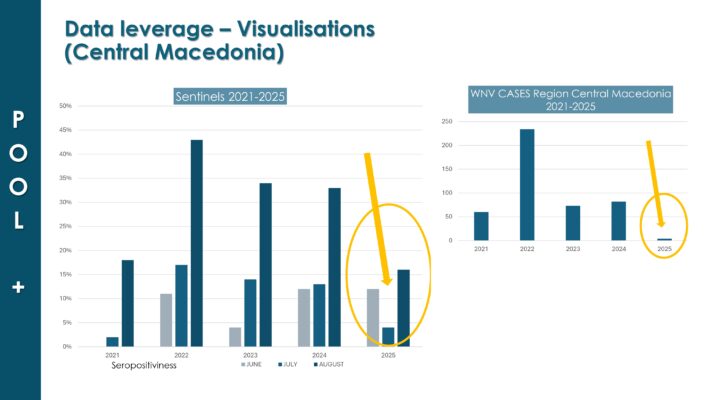
Thus, in 2025 in the Region of Central Macedonia, the circulation of infected mosquitoes (MIR) was recorded late, for the first time in the first half of August and at low levels, whereas in the previous years 2021–2024, the circulation of the virus in mosquitoes had already been detected by the first half of July at the latest. Similarly, measurements from monthly blood samples taken from young chicks in a total of approximately 50 villages in the Region of Central Macedonia showed, for the first time last year, no increase in seropositivity from June to July, contrary to what had occurred in previous years. These two significant indications of low WNV circulation in adult mosquitoes and poultry during June and July 2025 were accompanied by a very low number of human WNV cases in the Region of Central Macedonia during July–September (see Figures 2 and 3).
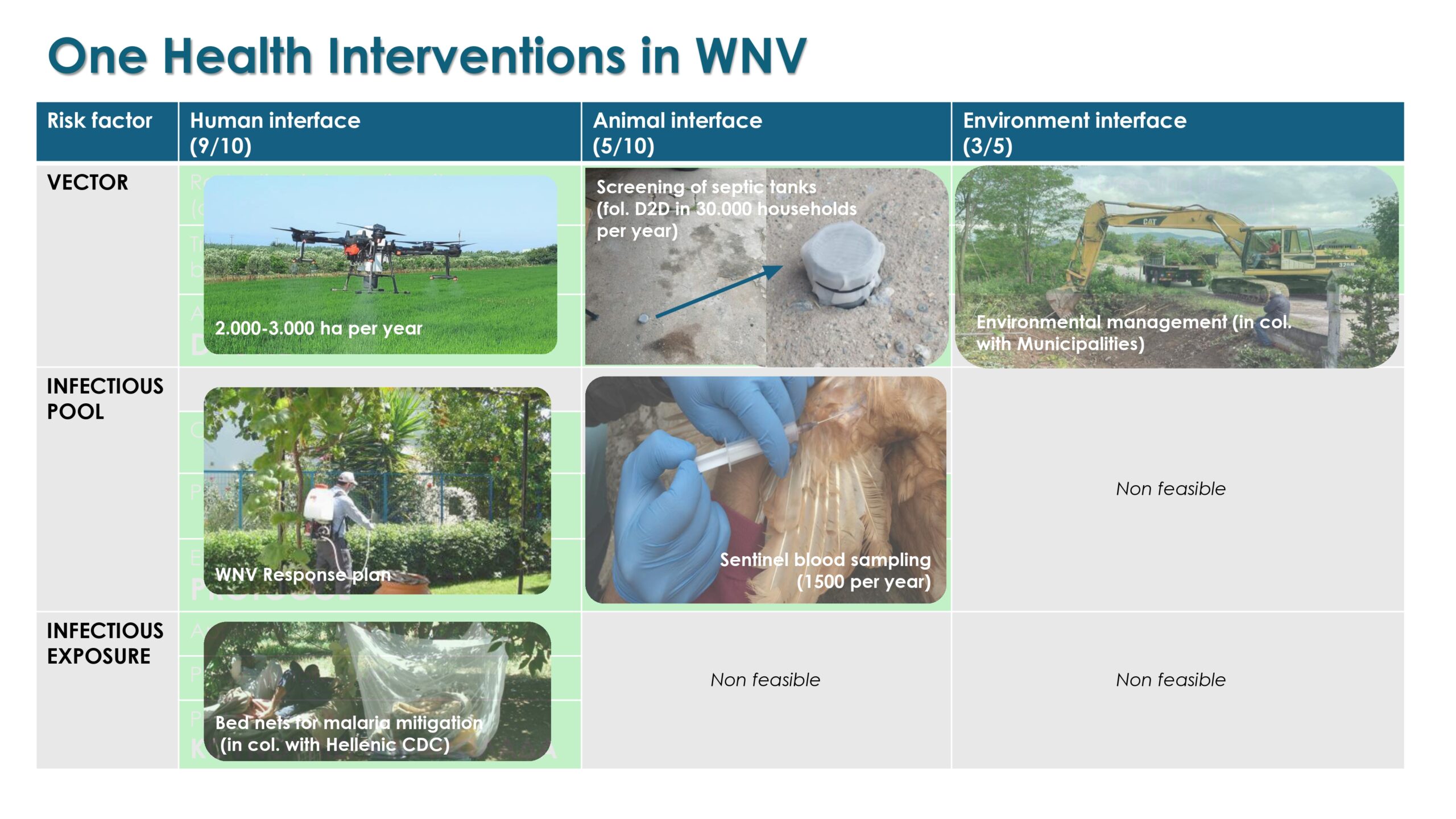
According to the 2019 WHO handbook on combating infectious diseases, “Operationalizing a One Health Approach: Building on the TDR-IDRC Research Initiative on Vector-Borne Diseases in the Context of Climate Change,” the interventions required under the One Health framework fall into twenty-five thematic areas that fall into three categories: human populations (10 topics), animals (10), and the environment (5). Ecodevelopment systematically applies, in the large-scale control projects it implements, nine of the ten topics in the first category, five of the ten in the second, and three of the five in the third, practically everything that can be applied in the context of West Nile virus mitigation actions. The integration of One Health principles ultimately allows us to make more reliable short-term predictions (on the order of a few weeks) and, consequently, to optimize our actions.
Coming soon in late June, upon the completion of the analyses for the first quarter (April–June) of the circulation levels of the WNV pathogen in mosquitoes (adult Culex pipiens) and in young sentinel chickens at the fixed network of 70 adult trap sites and from poultry houses in 50 settlements in the Region of Central Macedonia, respectively, we will announce this year’s first predictions for the epidemiological risk of WNV for the period from early July to mid-August.