






In the coming period, human cases are expected to hover at 50% of the average for the previous eight years.
Analysis of the data for 2026 – which has been systematically collected since 2010 by Ecodevelopment as part of the mosquito control project it is carrying out in the Region of Central Macedonia – has confirmed the initial assessment of a low epidemiological risk for West Nile virus during the previous period (1 July–15 August), as announced in a related press release on 3 July (see the press release here). As of today, 15 August, based on the epidemiological surveillance reports on West Nile virus infection in humans published by the Hellenic Organisation for Public Health (EODY) on a weekly basis, we are below 50% of the average number of cases recorded over the last eight years for the corresponding period. It should be noted that the reference period is the last eight years, given that no cases of West Nile virus were recorded in the Region of Central Macedonia between 2014 and 2017 (cases were reported in the periods 2010–2013 and 2018–2026).
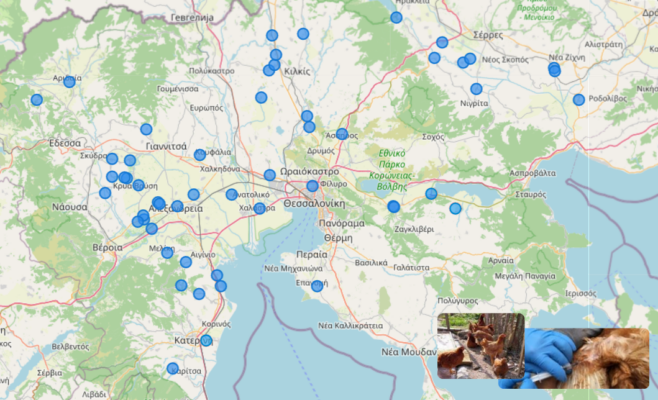
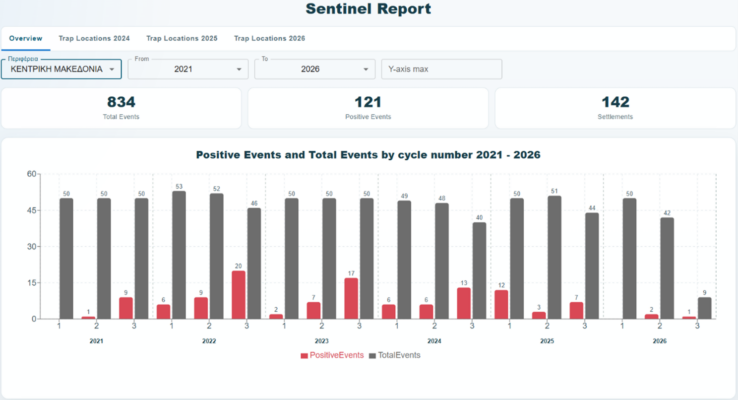
Based on recent data from 1 July ’26 to 15 August ’26, in relation to the circulation of the West Nile virus pathogen in mosquitoes and sentinel animals, and the abundance of mosquitoes (larvae and adults) of the species Culex pipiens, which is involved in the transmission of the virus, it is anticipated that, for the Region of Central Macedonia, there will be moderate transmission of the West Nile virus to humans during the remainder of the warm season (i.e. 15 August to 30 September). The total number of cases for the entire period this year in Central Macedonia is forecast to be around 50.
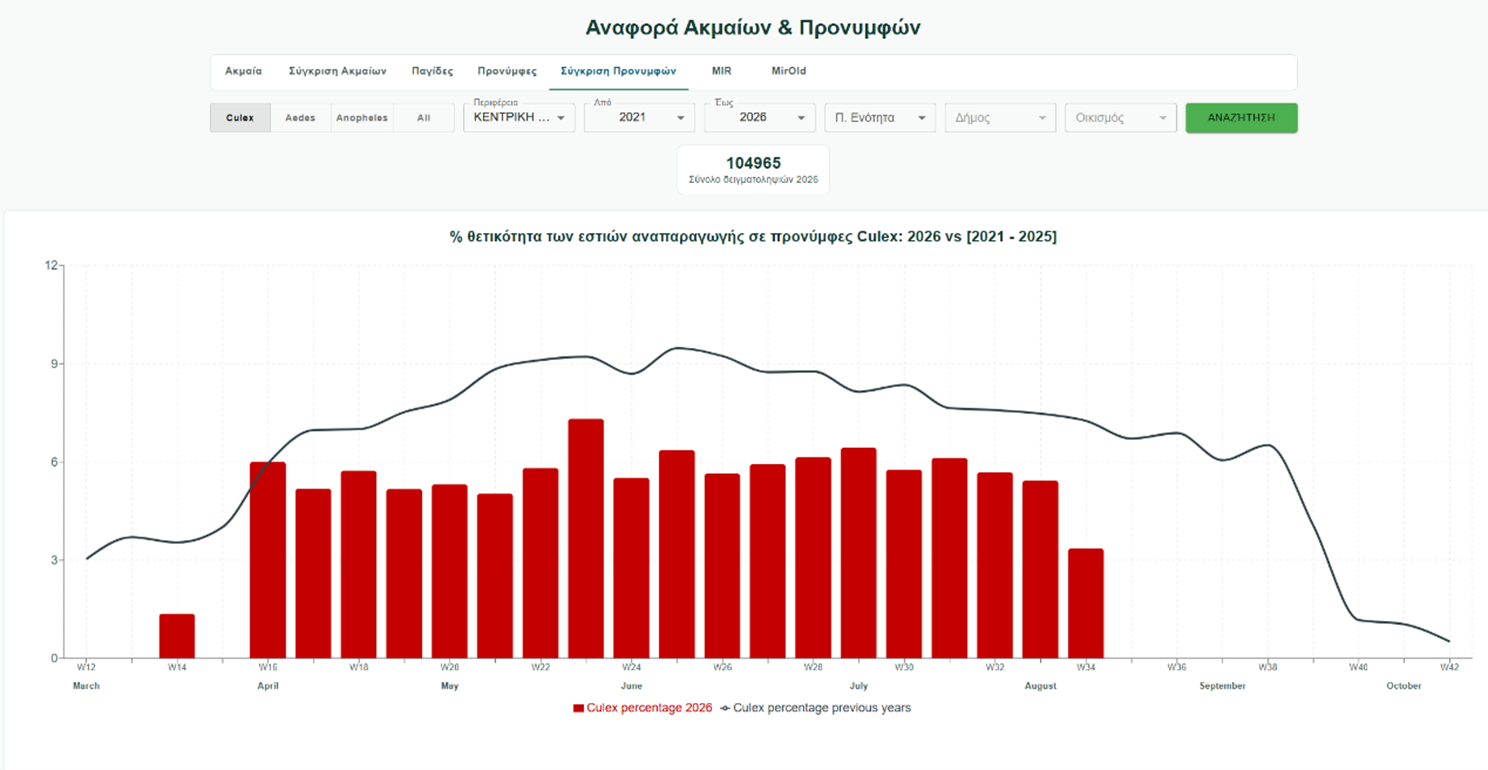
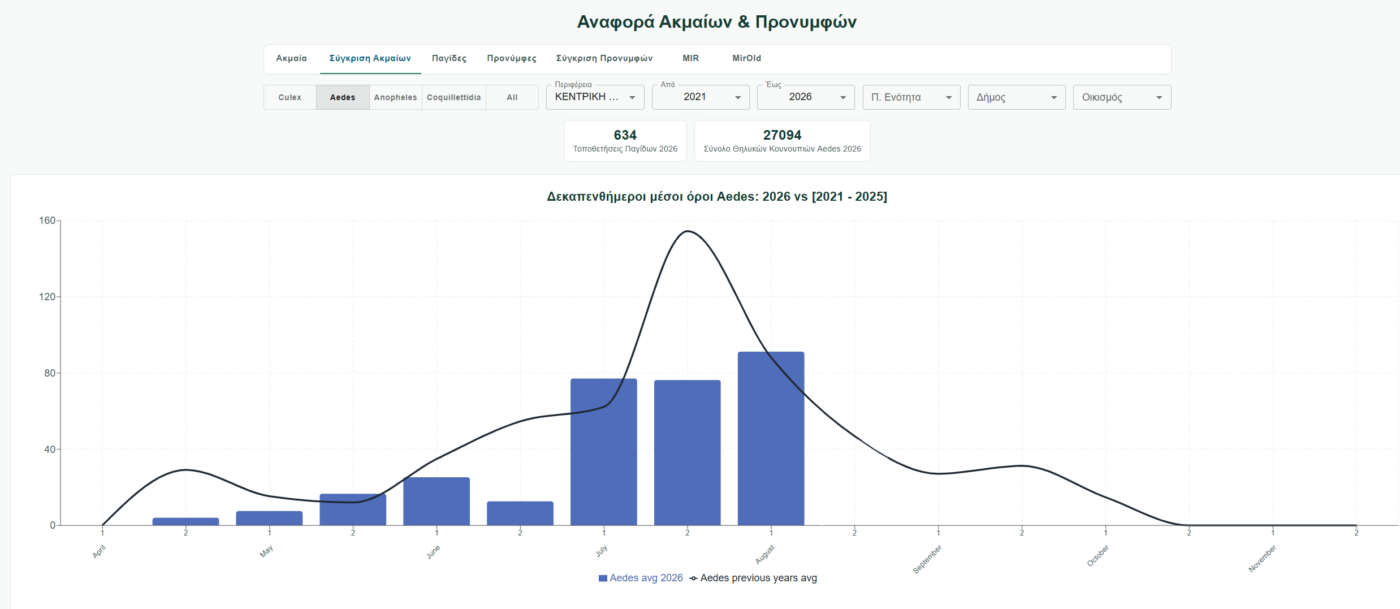
Regarding the nuisance caused by mosquitoes in the region of Central Macedonia, evening and night-time nuisance remains at low levels and is decreasing, with the exception of settlements near rice fields, where nuisance levels remain high. Finally, it should be noted that the increased localised nuisance during the afternoon hours is exclusively due to Aedes albopictus (the Asian tiger mosquito), which is pre-eminently an urban mosquito and breeds in our gardens. This particular species is not covered by the Central Macedonia Region’s collective mosquito control programme.