









At the end of the first quarter of the Central Macedonia Region’s mosquito control project (April–May–June), the first major collection and analysis of data for 2026 was also completed, relating to the epidemiological risk posed by the West Nile virus. The first significant observation is that the period we have already covered has been characterised by relatively low populations of Culex pipiens larvae and adult mosquitoes – the species involved in transmitting the virus – at approximately 65 per cent for larvae and 94 per cent for adult mosquitoes compared with the average for the last five years (2021–2025).
With regard to the circulation of the West Nile virus, preliminary data from the Region of Central Macedonia collected up to 30 June showed a 0.6 per cent positivity rate for the West Nile virus in adult mosquitoes (MOR_ out of a total of 162 samples for 2026; similarly, in domestic fowl under 6 months of age in 2026, zero seropositivity was recorded from a comprehensive blood sampling network across 50 settlements in the Region of Central Macedonia.)
The above results for 2026 are illustrated in the relevant graphs below, in comparison with the corresponding results for the previous five-year period (2021–2025).
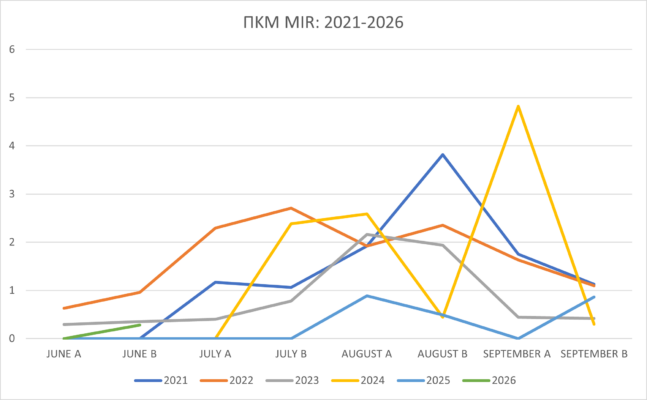
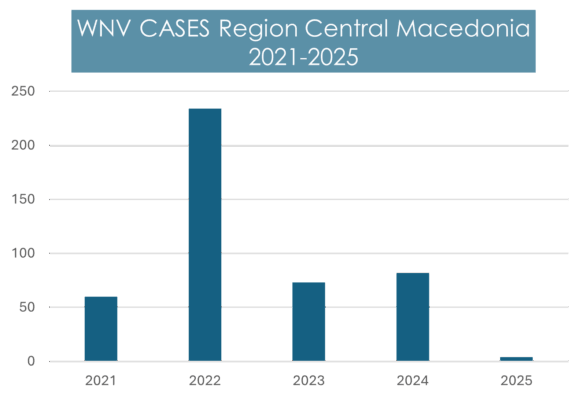
Graph showing the trend in MIR (Minimum Infection Rate/WNV infectious load index in adult mosquitoes of the genus Culex) from early June to late September for the years 2021–2026. In 2025, there was a delay in the onset of MIR and significantly lower values compared with all previous years, which resulted in a much lower number of human IDN cases that year (4 cases in 2025 compared with 50–234 for the years 2021–2024).
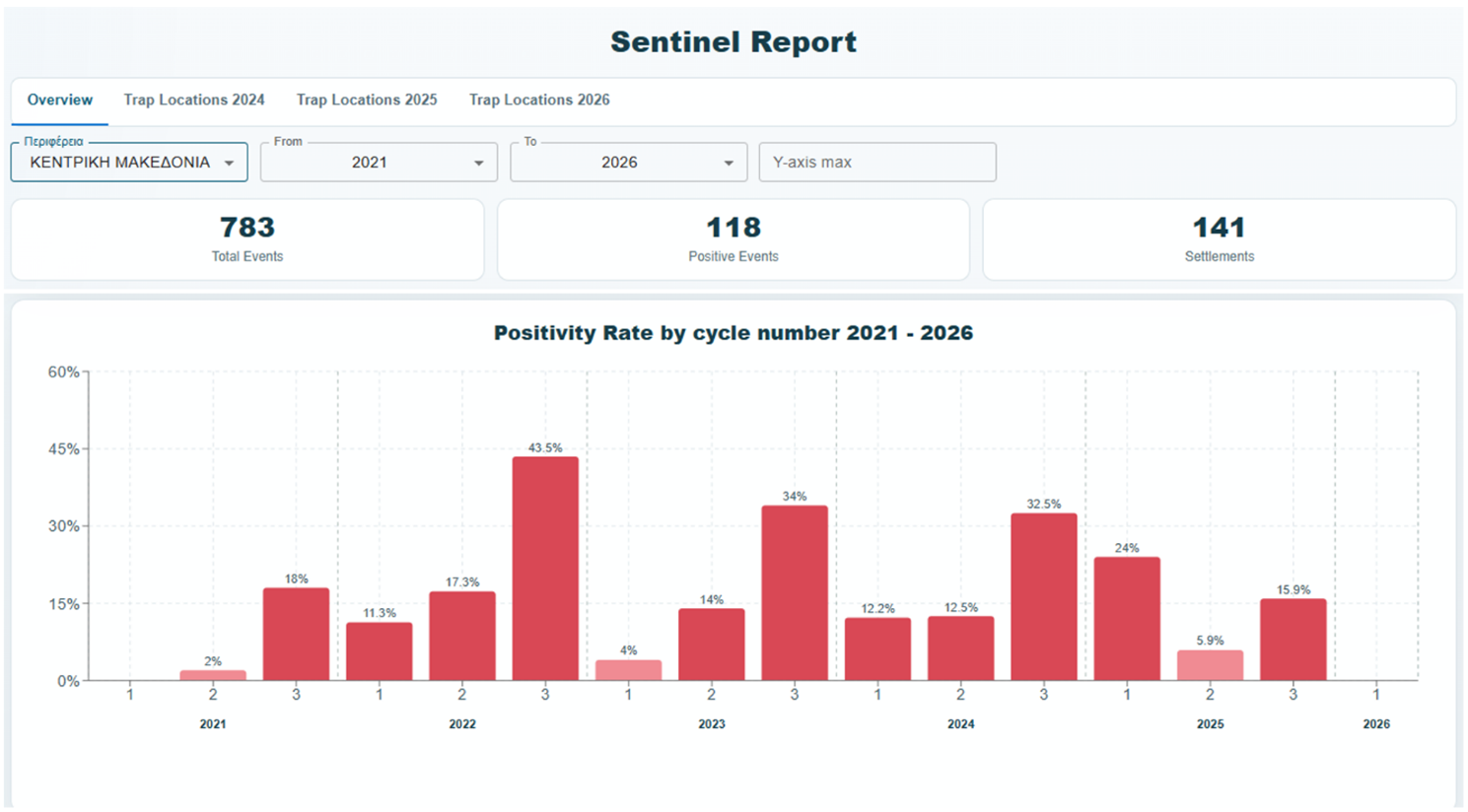
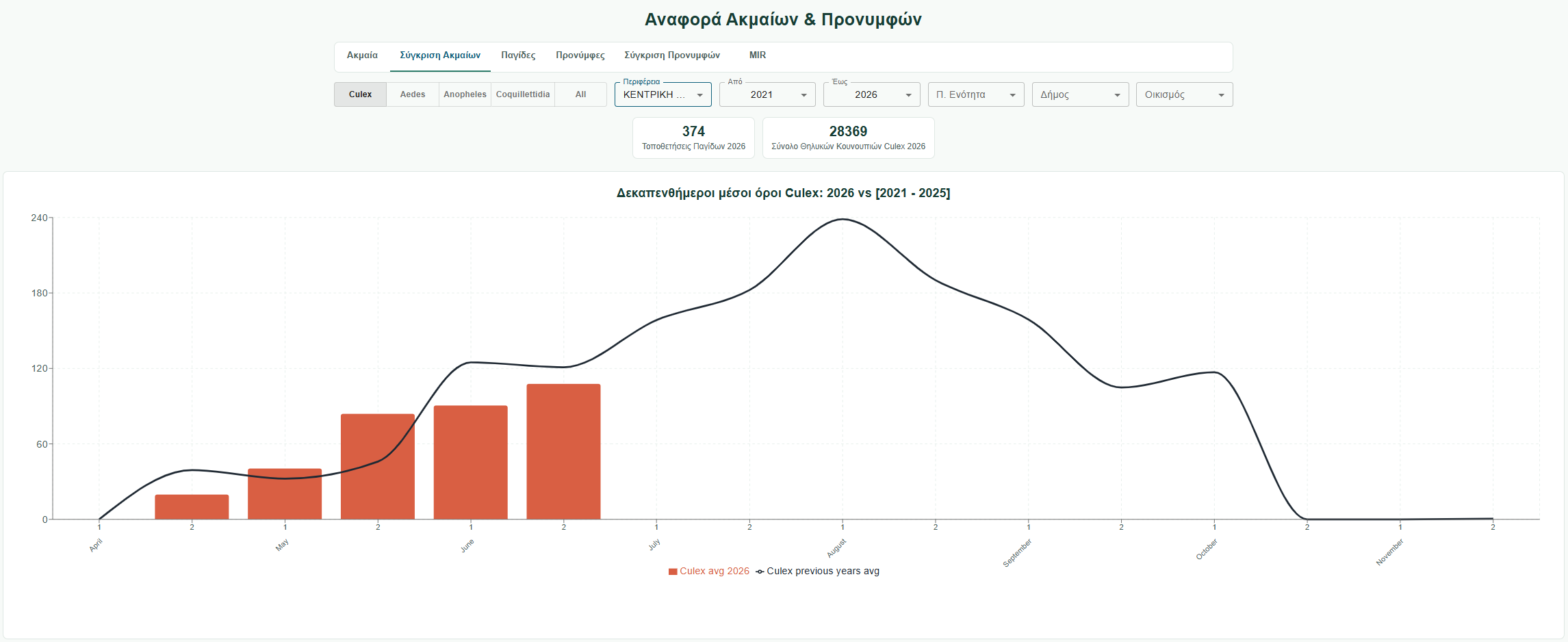
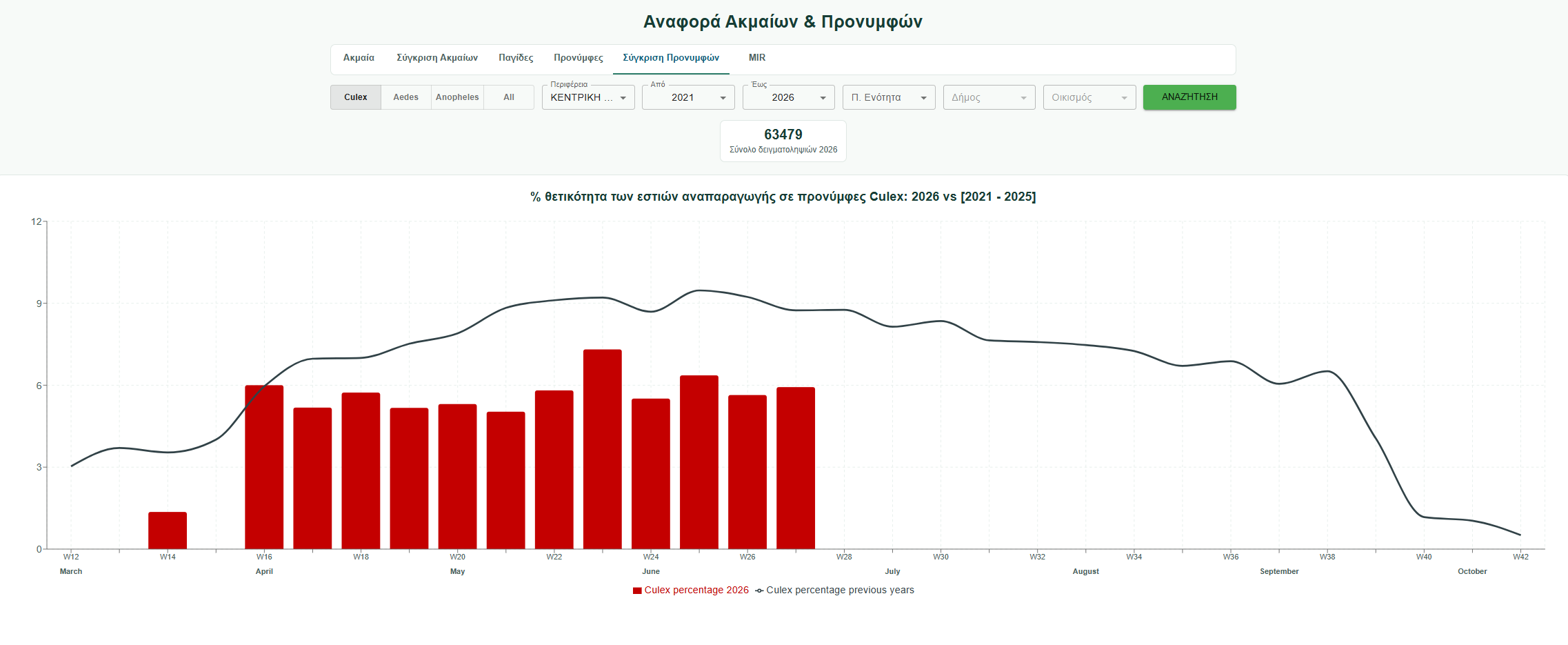
The combination of three key risk factors (abundance of mosquitoes – both larvae and adults; the presence of the West Nile virus in mosquitoes; seropositivity in sentinel domestic animals) suggests a low level of West Nile virus transmission to humans until mid-August.
It should be noted that the majority of active transmission of the West Nile virus occurs during the months of July, August and September. By the end of July, the second round regarding the circulation of the pathogen in adult mosquitoes and animals will have been completed, whilst systematic monitoring of larval and adult mosquito abundance will continue in parallel. Consequently, depending on these factors, a new update on the assessment of the epidemiological risk concerning West Nile virus will be issued in early August, covering the months of August and September.