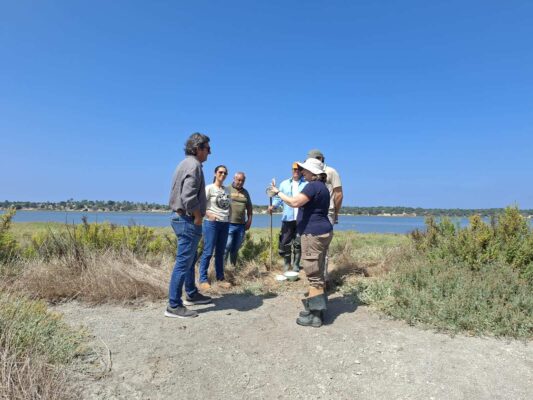

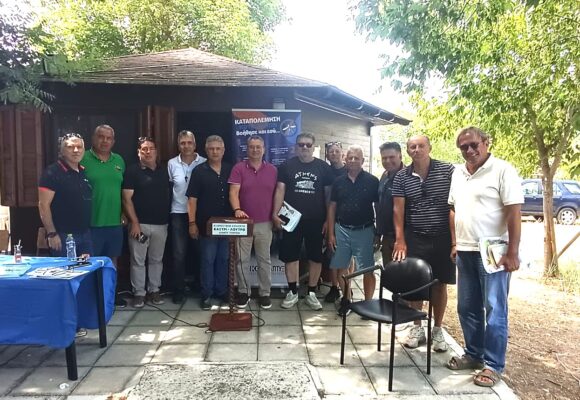


Ecodevelopment has the largest field data collection infrastructure: mosquito larvae and adults, West Nile virus pathogen circulation, field observations, and big data from environmental IoT systems. Each year, it conducts approximately 300,000 field visits with 120 technicians, who electronically register approximately 15 million field data records in real time on the ebite© platform for collecting entomological and observational data.
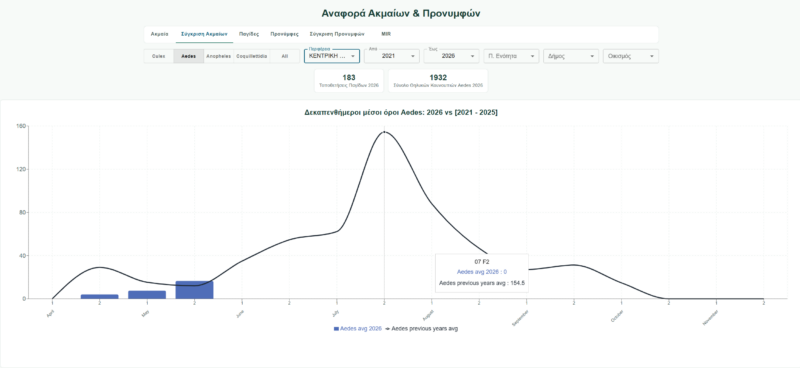
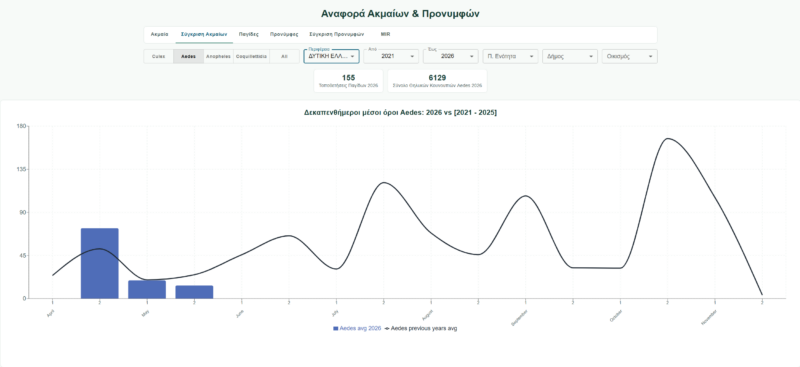
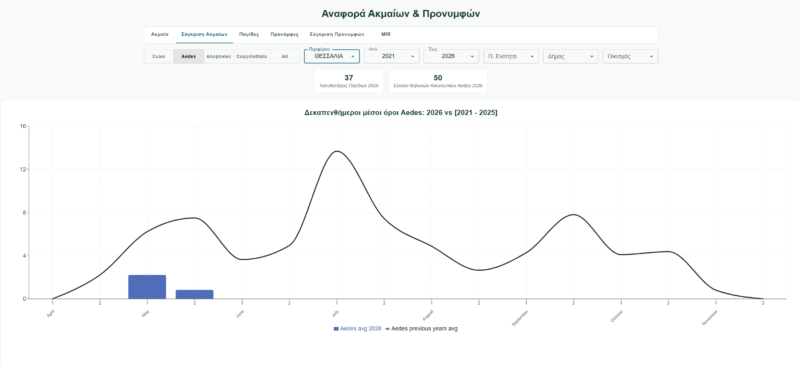
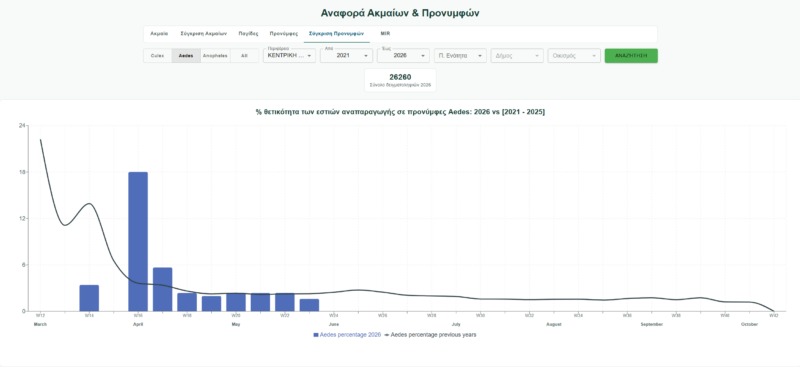
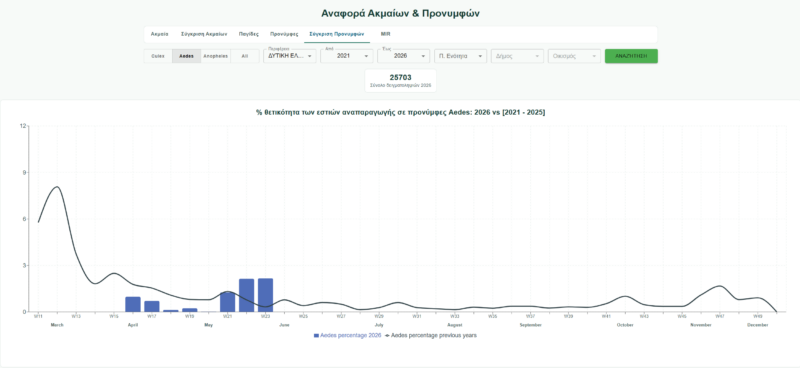
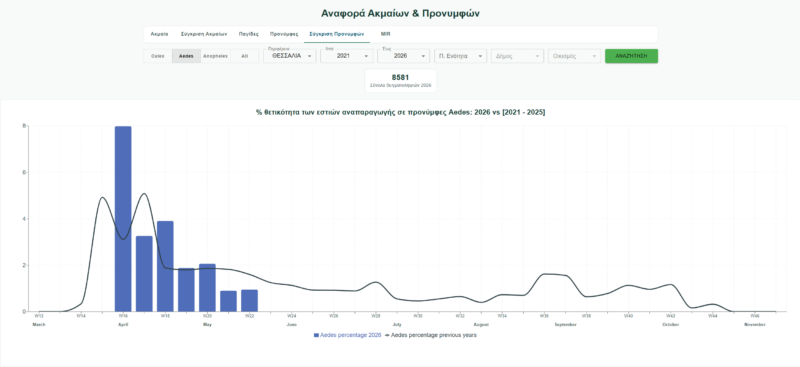
This year, we are continuing the periodic publication of indices on our website for three regions of the country: Central Macedonia, Western Greece, and Thessaly, for which there is sufficient data for the months of April and May. These indices relate exclusively to the abundance of the species Aedes caspius, which is the main source of nuisance during this period, at the adult level from a total of 375 samples collected from 156 Ecodev trap locations, and larval positivity from a total of 58,477 samples collected from a network of over 30,000 potential mosquito breeding sites in the peri-urban areas of the three regions. The usefulness of larval indices lies in the fact that they provide a significant indication of the subsequent abundance of adult mosquitoes over the following 10–20 days.
These specific indicators are derived from real-time updates to the database and are generated systematically on a daily basis. At the end of June, the epidemiological forecast regarding the risk of human cases of West Nile virus will also be published, based on relevant findings in adult Culex pipiens mosquitoes and blood samples from young domestic sentinel chickens. Finally, at the end of July and the end of September, the indicators presented today regarding the presence of mosquito larvae and adults will be updated, not only for Aedes but also for Culex and Anopheles.
Based on the data from adult Aedes surveys to date, it is clear that nuisance levels over the past two months have ranged from low to very low in all three reference regions (Central Macedonia, Western Greece, Thessaly), with the exception of the second half of April in Western Greece, where the relevant measurements for 2026 were double the average of the previous five-year period. It should be noted that these low values are most likely due to the prevalence of low temperatures during the previous two months, which did not allow significant hatching, although significant rainfall was recorded in some regions during this same period.
Positive rate of breeding sites in Aedes larvae: 2026 vs. 2021–2025
15-day averages for Aedes adult mosquitoes: 2026 vs. 2021–2025