


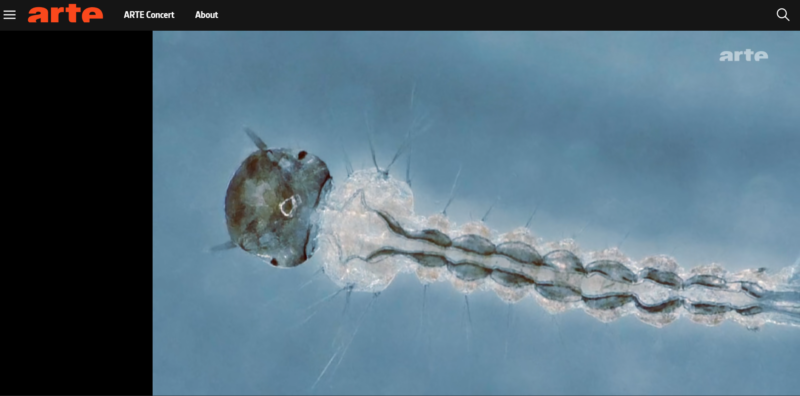


In June 2026, the well-known European channel ARTE aired the first feature-length documentary since the end of the anti-malaria campaign, dedicated exclusively to mosquitoes and the risks associated with them in Europe.
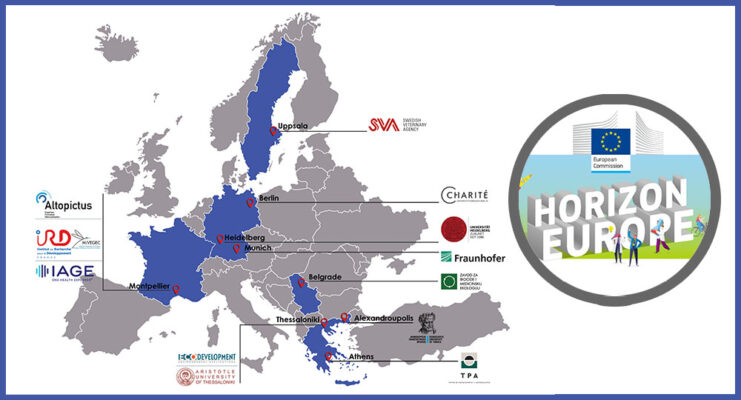
The documentary focuses on the large-scale mosquito control projects being carried out in Greece (and, in fact, devotes approximately 15 of its 53 minutes to the two largest projects being implemented by EcoDevelopment in the regions of Central Macedonia and Western Greece). At the same time, it highlights state-of-the-art research, focusing on Germany (Fraunhofer, Friedrich Loeffler Institute) and France (French National Research Institute for Sustainable Development—IRD). Finally, it devotes time to two companies involved in mosquito control in France: Altopictus—a company specializing in response measures to address human cases of Chikungunya and dengue—and Terratis—a company specializing in the production of sterile males for mosquito control using the SIT method.
According to ARTE, “Ecodevelopment is Greece’s “fire brigade” against mosquitoes. Commissioned by five regional governments, the company operates from Northern Greece to Crete… When they started in 1997, it was pioneering work.”
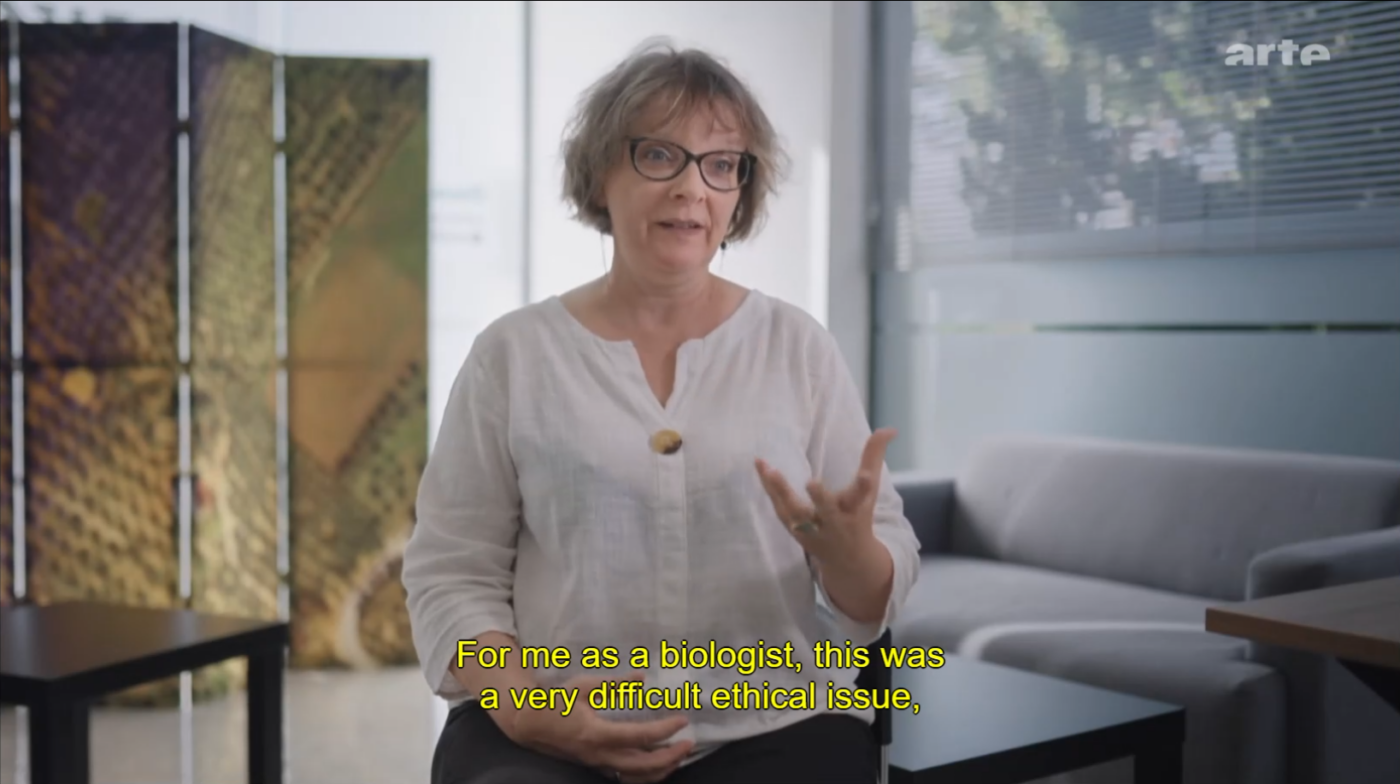
“No one was taking care of it (the issue), and the measures taken were uncoordinated and not necessarily environmentally friendly” — Sandra Gewehr, Director of the R&D Department at EcoDevelopment
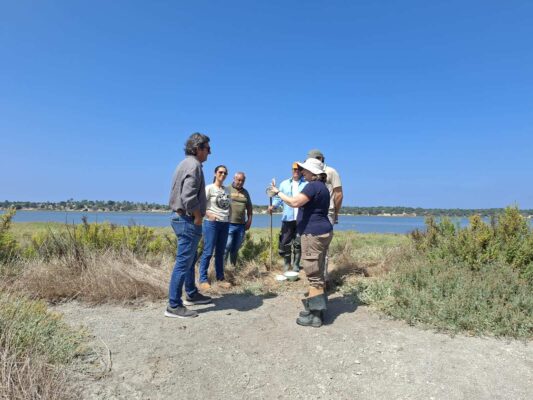
Over 120 Ecodevelopment staff members carry out around 300,000 field measurements each year…For a long time, areas could only be sprayed by hand from the ground, whilst helicopters were used in large areas. Drones now handle smaller, inaccessible areas.
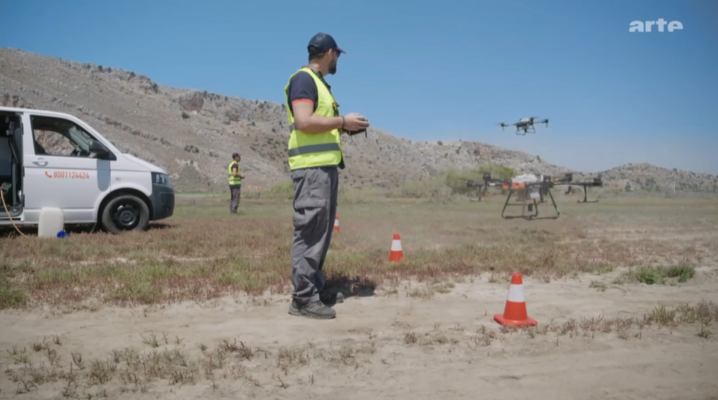
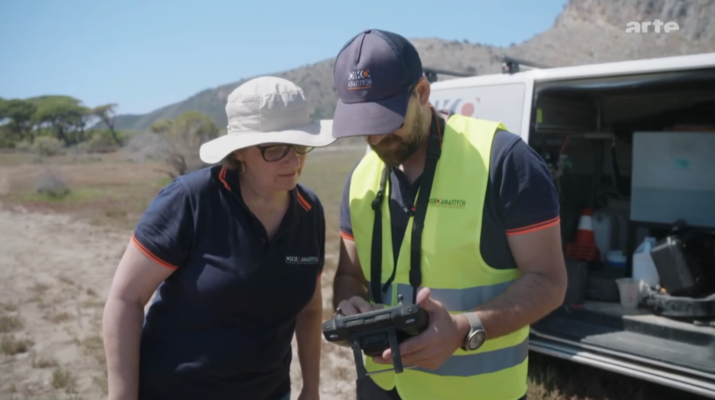
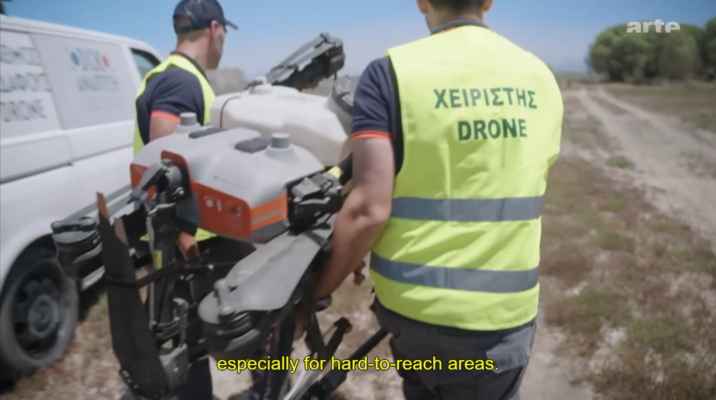
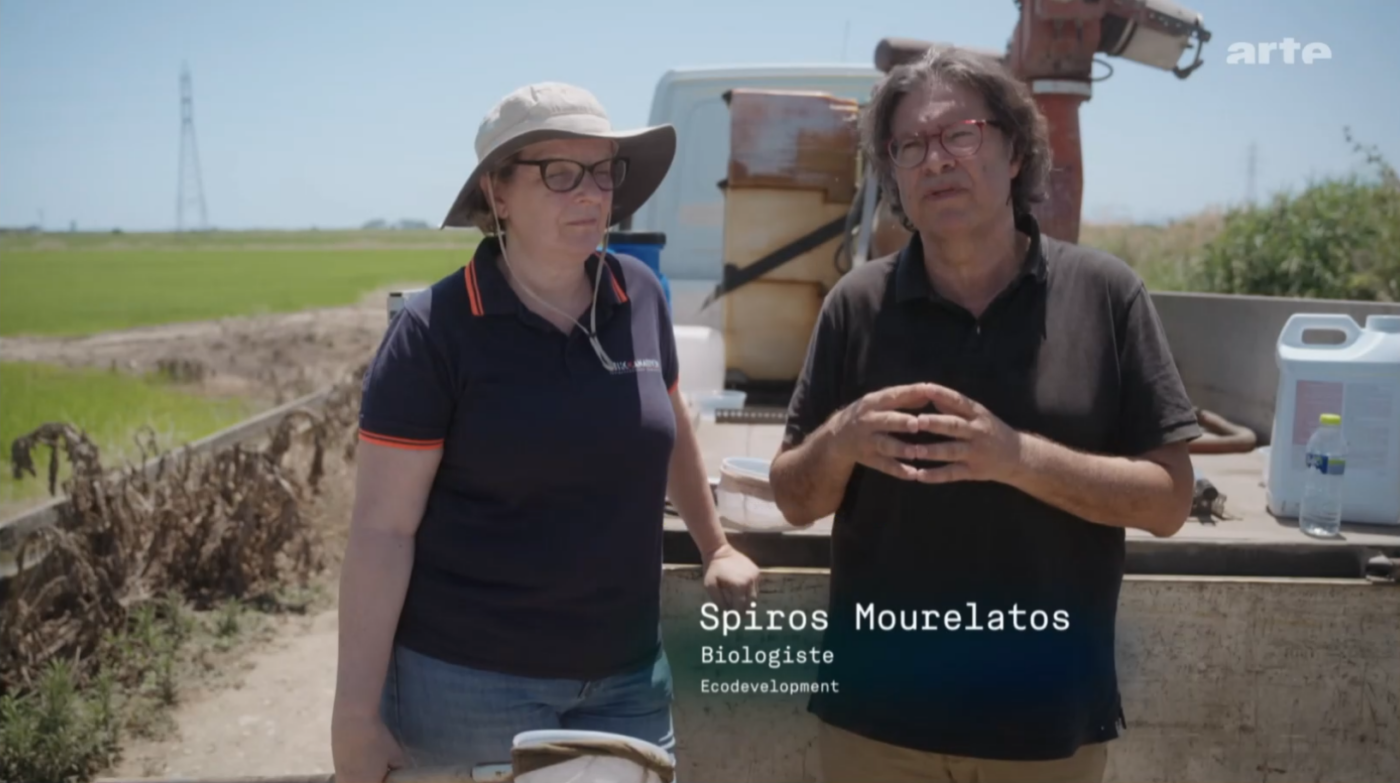
According to Spiros Mourelatos, President and CEO of Ecodevelopment, “If you’re in the middle of a mosaic of breeding sites of mosquitoes coming from everywhere, it’s obvious that your target is not to have zero mosquitoes. We follow and study the patterns in order to optimize our larviciding actions.”
“For us (Ecodevelopment), using technology is mainly about working faster and more precisely. It’s also about analyzing the data afterwards. What did I do well, what didn’t I ? And how can I do better?” – Sandra Gewehr
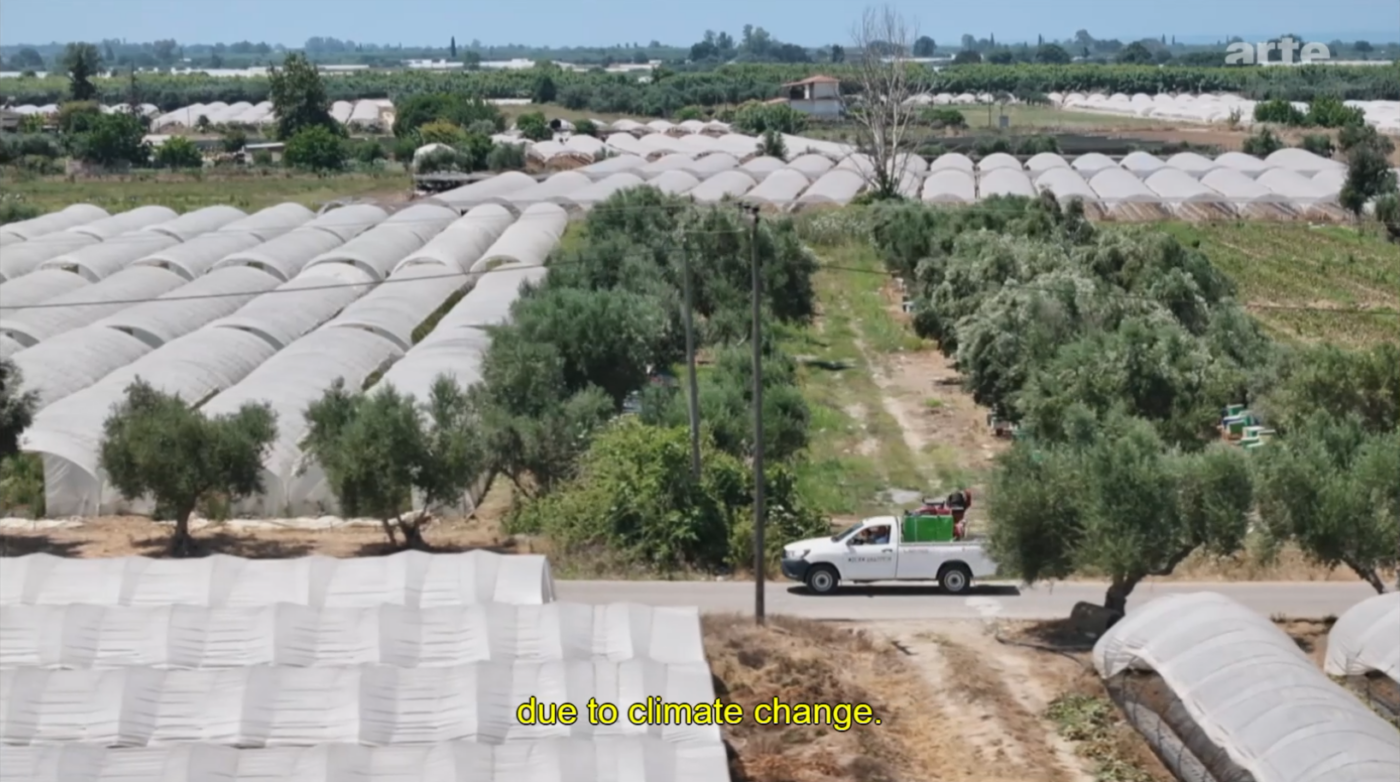
“When malaria first appeared in 2011… It probably caught us off guard… So there really was a state of alert here in the country, and that led to a successful response.” – Sandra Gewehr
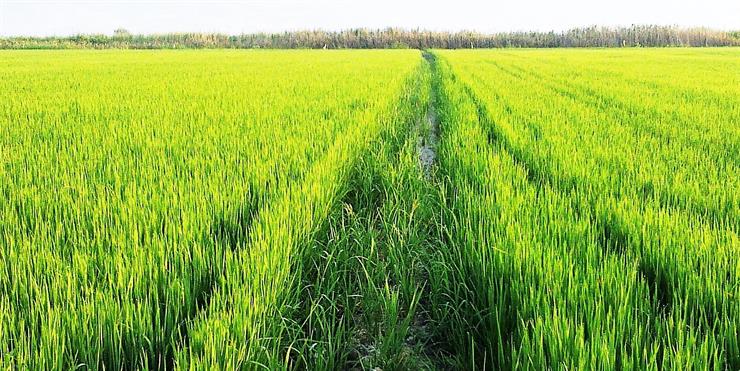
In Western Greece, according to Nikos Perros, Director of Southern Greece for Ecodevelopment, “…breeding sites (for mosquitoes that transmit malaria) can be found throughout the region. In this small area alone, there are two to three thousand such breeding sites.”
If someone becomes infected locally, intensive monitoring follows. Since 2021, no indigenous—that is, local—cases of malaria have been recorded. Although mosquito control efforts have proven successful, living conditions for people on the plantations have not changed significantly. (ARTE)
“It would be vital for people to live in proper homes, equipped with window screens, drainage, and sewer systems. The solution is, first and foremost, to have an effective tracking system and to take preventive action at an early stage.” — Sandra Gewehr
In conclusion, ARTE pointedly emphasized that “here in Greece, we are seeing a possible future scenario for Germany.”
You can watch the full documentary here.